How to Dress a Baby for Sleep: A Complete Guide to Safe, Comfortable Sleepwear by Room Temperature and Age
The Core Rule: One Layer More Than You Would Wear
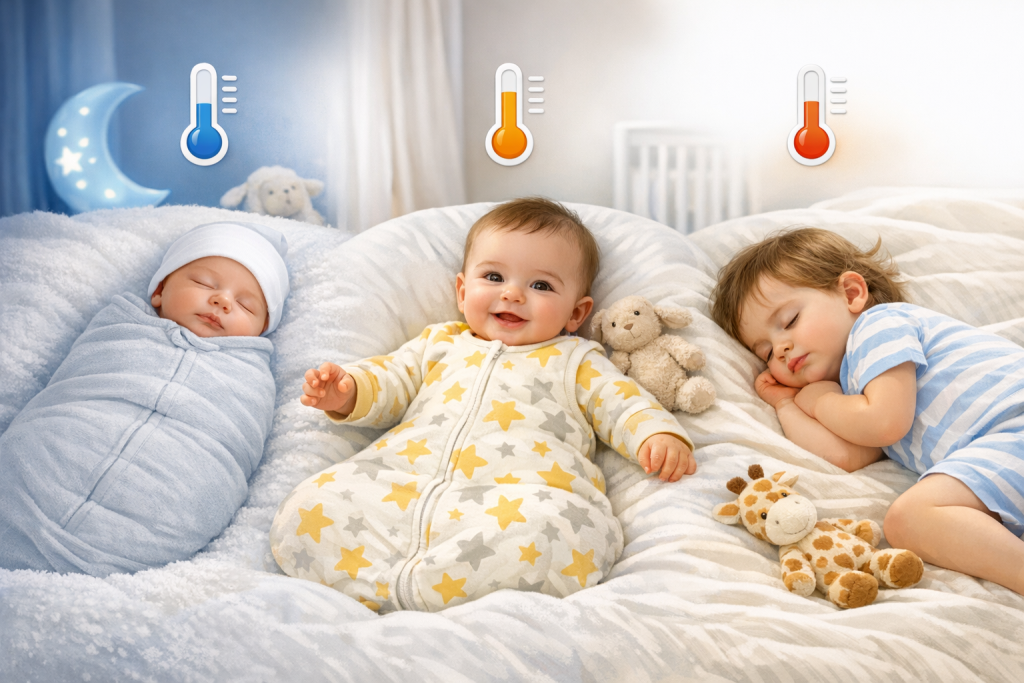
To dress a baby for sleep, put them in one more layer than an adult would wear comfortably in the same room, keep the room between 68–72°F (20–22°C), and use a sleep sack or swaddle instead of loose blankets. The goal is a baby that feels warm at the chest and neck but not sweaty.
This single guideline — one extra layer — comes from pediatric sleep guidance issued by the American Academy of Pediatrics (AAP) and the UK’s Lullaby Trust. It works because infants under 12 months regulate body temperature less efficiently than adults: they lose heat faster through their proportionally larger heads, but they also overheat more quickly because they cannot kick off covers or move away from a warm surface. A layered system (bodysuit + sleep sack, for example) gives caregivers a way to add or subtract one piece based on the night’s temperature.
Overheating is a documented risk factor for Sudden Infant Death Syndrome (SIDS). A 1996 study in the BMJ found that infants who were over-wrapped or whose room temperatures exceeded 70°F had measurably higher SIDS risk. That is why modern sleepwear guidance leans toward slightly cooler conditions with appropriate clothing rather than warm rooms with light dressing.
Understanding the TOG Rating System
TOG (Thermal Overall Grade) is a unit of thermal insulation used on sleep sacks and swaddles. Higher TOG = warmer garment. Most baby sleepwear ranges from 0.2 TOG (lightweight muslin) to 3.5 TOG (heavy winter). Matching TOG to room temperature is the single most reliable way to dress a baby correctly.
| Room Temperature | Recommended TOG | Suggested Layers Underneath |
|---|---|---|
| 74–78°F (24–26°C) | 0.2–0.5 TOG | Short-sleeve bodysuit or diaper only |
| 69–73°F (21–23°C) | 1.0 TOG | Short or long-sleeve bodysuit |
| 64–68°F (18–20°C) | 2.5 TOG | Long-sleeve footed pajamas |
| Below 64°F (under 18°C) | 3.5 TOG | Long-sleeve PJs + long-sleeve bodysuit underneath |
Brands like Halo, Kyte Baby, ergoPouch, and Woolino all print TOG values on their tags. If you own a sleep sack without a TOG rating, treat thin cotton as approximately 0.5 TOG, medium quilted cotton as 1.0 TOG, and a thick fleece sack as roughly 2.5 TOG.
Age-by-Age Sleepwear Recommendations
Sleepwear choices change as a baby grows. Newborns benefit from swaddles for the startle reflex; older infants need transition sacks; toddlers can wear walking sacks or pajamas with sleep socks. Never use a swaddle once a baby shows any sign of rolling.
Newborn to 8 Weeks
A snug swaddle (arms in) over a short or long-sleeve bodysuit is standard. The swaddle dampens the Moro reflex, which can wake newborns 20–40 times per night. Use a hip-healthy swaddle that allows the legs to bend and splay — the International Hip Dysplasia Institute warns against tight leg wrapping. Skip hats indoors; newborns release significant heat from the head, and a hat plus a swaddle in a 70°F room is a common cause of overheating.
2 to 6 Months
Transition to a sleep sack with arms out (Merlin’s Magic Sleepsuit, Zipadee-Zip, or a standard sleeveless sack) as soon as you see rolling attempts — typically between 8 and 16 weeks. Underneath, a footed pajama in winter or a short-sleeve bodysuit in summer works for most rooms kept around 70°F.
6 to 12 Months
Use a standard sleep sack over footed pajamas. Babies at this age move constantly, kicking off blankets, so a wearable blanket is essential. Avoid pajamas with feet that are too tight; check toes weekly because growth at this stage often outpaces the sleepwear size on the tag.
12 Months and Up
Loose blankets become acceptable after the first birthday, though many families keep using sleep sacks until age 2–3 because toddlers stay covered all night. Walking-style sacks with leg holes let toddlers stand in the crib safely.
Choosing Fabrics: Cotton, Bamboo, Merino, and Synthetics
Natural fibers — cotton, bamboo viscose, and merino wool — are the best choices for baby sleepwear because they breathe and wick moisture. Synthetic fleece traps heat and can contribute to overheating in rooms above 68°F.
- Cotton: Affordable, washable, breathable. Best all-around fabric. Look for OEKO-TEX or GOTS certification to avoid chemical residues.
- Bamboo viscose: Softer and more temperature-regulating than cotton; favored by brands like Kyte Baby. Slightly more expensive but excellent for babies with eczema.
- Merino wool: Naturally thermoregulating across a wide temperature range. Woolino sacks claim a single sack works from 65–75°F. Worth the premium in variable climates.
- Polyester fleece: Use only in cold rooms (under 65°F). Does not wick sweat.
- Flame-retardant treated fabrics: In the U.S., loose-fitting pajamas must be flame retardant or labeled “wear snug-fitting, not flame resistant.” Snug-fit cotton is the safer route.
How to Check If Your Baby Is Too Hot or Too Cold
The most reliable check is to feel the baby’s chest or back of the neck — not hands or feet, which run cool even when the core is warm. Skin should feel warm and dry. Sweaty hair, flushed cheeks, rapid breathing, or damp pajamas indicate overheating; mottled skin or a cold torso means add a layer.
Specific warning signs of overheating include:
- Heat rash on the neck, chest, or back
- Hair damp at the hairline or behind the ears
- Breathing rate over 60 breaths per minute at rest
- Restless thrashing accompanied by red cheeks
- A bedroom thermometer reading above 74°F with the baby in a 2.5 TOG sack
Cold hands and feet alone are normal — peripheral circulation in infants is immature for the first year. Do not add layers based on cool extremities if the core feels warm.
What Not to Put in the Crib
The AAP’s safe sleep guidance (updated June 2022) is explicit: no loose blankets, no pillows, no crib bumpers, no stuffed animals, no positioners, and no weighted sleep products for any baby under 12 months. The Safe Sleep for Babies Act of 2022 banned inclined sleepers and padded crib bumpers in the U.S.
Weighted sleep sacks and swaddles — including the Dreamland Baby and Nested Bean brands — were the subject of a 2023 AAP advisory warning against their use. Despite manufacturer claims, no peer-reviewed evidence supports weighted sleepwear as safe for infants, and several pediatric sleep experts have publicly opposed them.
Seasonal Adjustments and Travel
Summer and winter both pose dressing challenges. The room — not the season — should drive your choice, but environmental factors like air conditioning failure, road trips, and visits to grandparents’ houses often shift conditions.
Summer Strategy
If indoor temperature exceeds 75°F, strip down to a diaper plus a 0.2 TOG muslin sack or just a short-sleeve bodysuit. Run a fan in the room — a 2008 study in Archives of Pediatrics found fan use reduced SIDS risk by 72% by improving air circulation. Do not aim the fan directly at the baby.
Winter Strategy
Layer rather than crank the thermostat. A long-sleeve cotton bodysuit under footed fleece pajamas under a 2.5 TOG sack handles most rooms down to 64°F. Keep cribs at least two feet from drafty windows and exterior walls. Never use electric blankets or space heaters within four feet of the crib.
Travel and Car Seats
Remove puffy coats before strapping a baby into a car seat — they compress under crash force and create dangerous harness slack. For sleep in a Pack ‘n Play or travel crib, bring the same sleep sack the baby uses at home; familiarity helps with sleep onset in new environments.
Common Dressing Mistakes
The most frequent errors are over-dressing, using hats indoors, mixing a swaddle with a hat, and ignoring the actual room temperature in favor of how the parent feels.
- Indoor hats: Beyond the first few hours after birth, hats indoors increase overheating risk significantly.
- Swaddling a rolling baby: Once a baby can roll, an arms-in swaddle is a suffocation hazard. Switch to arms-out immediately.
- Adding a blanket over a sleep sack: Defeats the purpose of the sack and adds an unknown amount of warmth.
- Skipping the room thermometer: Hallway thermostats often read 4–6°F different from the nursery. Use a dedicated nursery thermometer.
- Dressing for the cold room of the morning rather than the warm room at bedtime: Rooms often heat up after the door closes and the baby’s body heat accumulates.
Frequently Asked Questions
Should my baby wear socks to bed?
Generally no — if your baby is wearing footed pajamas or a sleep sack, additional socks are unnecessary and may add too much warmth or fall off and become a hazard. Socks make sense only if the baby is wearing footless pajamas in a cool room (below 68°F). Always check the toes first; small socks can cut off circulation if outgrown.
Can my baby sleep in just a diaper?
Yes, in very warm rooms (above 78°F) a diaper alone, or a diaper under a 0.2 TOG muslin sack, is appropriate. This is common in non-air-conditioned summer climates. Make sure the room is not so warm that the baby is sweating, and continue to follow safe sleep rules: firm mattress, no loose bedding, back-sleeping position.
What temperature should the nursery be?
Pediatric guidance places the ideal nursery temperature between 68°F and 72°F (20–22°C). This range allows comfortable dressing with one or two layers plus a 1.0 TOG sack, and minimizes both overheating and chilling risk. Use a digital thermometer in the nursery rather than relying on a central thermostat reading from another room.
When should I stop swaddling?
Stop swaddling as soon as your baby shows any sign of attempting to roll, usually between 8 and 16 weeks. Continuing to swaddle a rolling baby risks suffocation if they roll to their stomach and cannot push up with restrained arms. Transition products like the Zipadee-Zip, Merlin’s Magic Sleepsuit, or arms-out sleep sacks bridge the gap to standard wearable blankets.
Are weighted sleep sacks safe?
No. The American Academy of Pediatrics issued a 2023 statement against weighted sleep sacks, swaddles, and blankets for infants. The concern is that added weight on the chest may restrict breathing, lower oxygen saturation, and prevent a baby from rousing when they need to. Use only unweighted, properly sized sleep sacks from reputable brands.
How do I dress a baby with a fever for sleep?
Dress a feverish baby in one light layer — typically a single cotton bodysuit or short-sleeve pajama — and keep the room slightly cooler, around 68°F. Over-dressing traps heat and can raise core temperature further. Consult your pediatrician about any fever in an infant under 3 months immediately, and for older babies if the fever exceeds 102°F or persists more than 24 hours.
Do I need different sleepwear for naps versus nighttime?
Not necessarily, but daytime room temperatures are often higher due to sunlight, so you may need one TOG step lighter for naps. Many parents use the same sleep sack day and night for routine consistency, simply adjusting the layers underneath. Blackout curtains help keep daytime nursery temperatures stable.
Can a baby overheat from a sleep sack?
Yes, if the TOG rating is too high for the room temperature or if too many layers are worn underneath. A 2.5 TOG sack in a 75°F room is a common overheating scenario. Always match the TOG to the actual measured nursery temperature and check the baby’s chest within an hour of bedtime to confirm comfort.